
Clark County Multi-Day Arrest Records
The county publishes no multi-day jail blotter. Nothing like it exists online. The live Miami Valley Jails roster shows only who is in custody right now. Its focus is the present, not last week. A released person can vanish from it. Springfield, New Carlisle, and Enon post no routine arrest blotter either. So the trail splits. A multi-day Clark County trail runs through the jail, the arresting agency, and the courts.
Municipal Court rules describe what fills that gap. Every morning, jail staff give the clerk a 5:00 a.m. list of people held who have not yet appeared. Names and aliases appear on it, plus booked charges, warrant or capias details, other-jurisdiction notes, and an arresting officer for the felony portion. A weekly list of confined people adds names, case numbers, status, charges, and bonds. Both lists are official internal records. The rules never offer them for public browsing.
Trace Clark County Arrests Across Days
Start from the event date and work forward. Each official source answers a different question, and none of them amounts to a full county arrest log by itself.
- Check the current Clark County jail roster for a person who may still be held.
- Search the Municipal Court case system by name, citation, or known case identifiers.
- For a felony that moved beyond the first court stage, consult the Clark County Common Pleas Clerk.
- Request the incident or arrest report from the police division or sheriff that created it.
- Ask the sheriff for a specific booking or jail-list record when the public roster no longer shows the person.
Write down the date you checked. Note which system gave you the answer. The roster shifts within the day. Municipal Court entries may lag behind the arrest. Common Pleas material can arrive once a felony moves by indictment. A name match alone proves little. Match case number, birth information when lawfully shown, agency, and event date too.
For the incident narrative, ask the law-enforcement agency that made the arrest. Ask the sheriff for booking details or a booking photograph. Hearings and outcomes belong to the clerk. Each office holds one piece. Keeping those channels straight stops a court entry from being mistaken for the original blotter. It also keeps a live custody status from being treated as an arrest archive. The Municipal Court's official case search is the place to start.
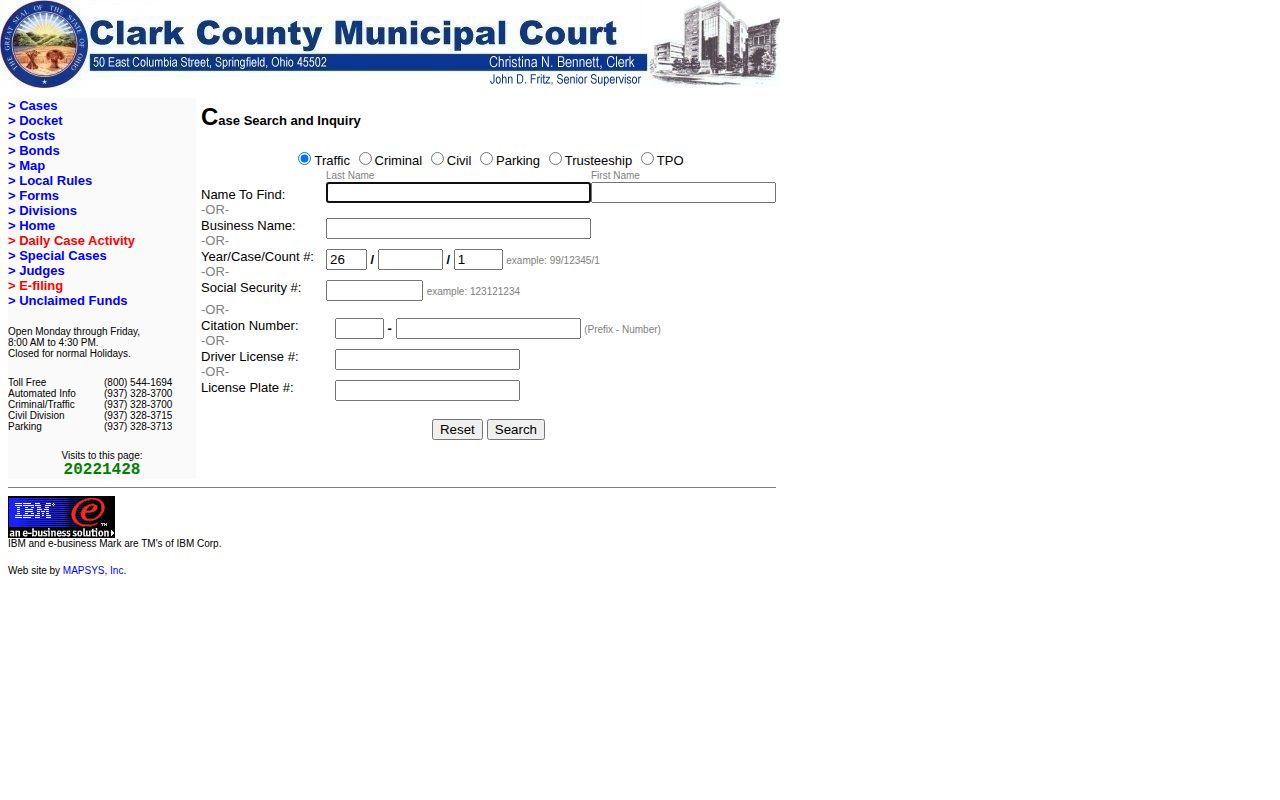
The fields locate filed cases. The court warns that online information is never guaranteed.
Clark County Blotter Record Fields
No single public entry card exists to inventory. These fields come from the Municipal Court rules' internal jail-list description and the court's own search. There is no invented online blotter behind them.
| Field | Official context |
|---|---|
| Name and aliases | Used on the morning jail list to identify a person in custody. |
| Booked charges | Records charges entered at booking. |
| Case number | Appears in court and weekly confined-person records when assigned. |
| Custody or case status | Can change after release, transfer, arraignment, or later hearings. |
| Bond | May appear in the weekly jail list or court record and can change. |
| Warrant or capias flag | May be noted in the internal list; confirm with court or sheriff. |
| Arresting officer | Described for the felony portion of the internal morning list. |
A booking photo is never a guaranteed field. The public roster shows no photos, and the Ohio Courts Network status record marks Clark County "No Mugshots." A photo may still sit in an agency file. Requests are subject to Ohio law, exemptions, and redactions. Never treat an image from an unofficial page as the county's own record.
Weekend Clark County Arrest Timing
Weekend and holiday arrests can create a cluster of records without ever producing a public "weekend arrest list." The live roster adds and drops entries as custody changes. Court filings follow the court's own calendar. Municipal Court rules say a booked person who is not released should appear within one court day. In-custody arraignments happen by video from the jail. That timing explains a familiar pattern. A Monday court search may add context to a weekend booking, while an immediate search may show nothing yet.
A "capias" is a court order. It tells law enforcement to take a person into custody. An "arraignment" is the first hearing. Charges and rights are addressed there.
Common Pleas becomes the relevant source once a felony is involved. Its Legal Division says online public-record information runs through the prior business day and updates nightly. That built-in lag matters. A blank same-day result can simply mean the system has not caught up.
Note: A holiday can delay the next court trace even while the current-custody roster continues to refresh.
Clark County Arrest Log Archives
Clark County's Municipal Court keeps jail-list records on file. Destruction or transfer happens only when a court orders it. Retention is one thing, though, and web publication is another. A name can drop off the roster. The paper trail may survive in a file drawer. So a focused records request still makes sense long after an arrest fades from public view. Spell out the person, the date range, the arresting agency, and the exact record you want. Ask the clerk where that file sits. It may sit with the sheriff or another custodian. It may also have been transferred or destroyed.
The sheriff's official request page lists in-person, fax, telephone, and email routes. The route depends on the type of record. Payment usually comes before production, and no general turnaround is promised. Open investigations, juvenile matters, discovery rules, and victim privacy can all justify withholding or redaction. A narrow request travels faster than a blanket demand for every arrest ever made.
Municipal Court computerized case records reach back to January 1, 1990. Older paper files require direct contact. Remember that court records are not booking history. They track filed cases and what happened after, not who passed through the jail. For deep local history, the Clark County Historical Society and Ohio archives may hold newspapers or government papers. Neither tracks current bookings. Neither guarantees a booking photo.
Local News Is Selective
Springfield News-Sun and WHIO's Clark County coverage cover selected arrests, court matters, and enforcement operations. Neither outlet runs a complete county booking feed. Their images are often scene photos or story art rather than true booking photographs, and the Springfield News-Sun local-news page shows that selection in practice.
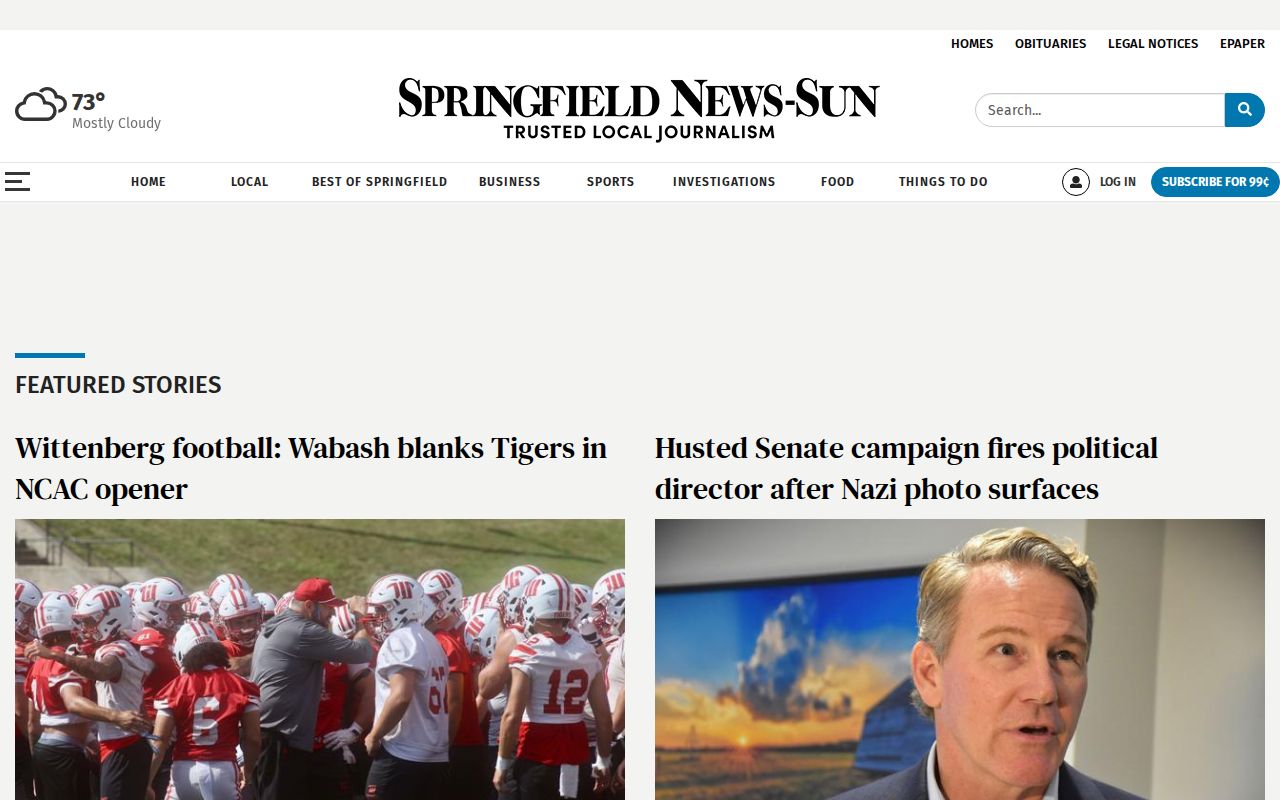
News reporting adds color and detail. It cannot stand in for the official record. Spot an agency and a date in the story. Then confirm the event through the sheriff, the police records unit, or the court. Editors pick what to publish. Corrections appear quietly. Stories linger online long after a case changes shape. An arrest the papers skip may still sit in an agency file somewhere.
New Carlisle adds its own wrinkle. Council material says the sheriff furnishes daily logs to the city on request. Yet New Carlisle publishes no web blotter for residents to browse. Internal sharing between agencies never becomes public access on its own.
Verify Clark County Case Outcomes
A blotter entry, jail list, booking record, and court docket each mark a different stage. The vocabulary matters. "Booking" is the jail's processing of someone arrested. "Bond" sets the terms of release while a case is pending. "Disposition" is the court's final word on the outcome. Someone arrested in Clark County can be released and vanish from the roster the same day. A filed charge can later shrink or disappear.
Handle dates with the same care. The incident date, the arrest date, the jail-booking date, the first appearance, the filing, and the disposition rarely line up on one calendar square. Keep them separate rather than collapsing a multi-day arrest review into a single timeline.
Third-party sites push yesterday's arrests and last-30-day photo lists for Clark County. None of that is official. Those pages go stale and miss later court outcomes, so start with official sources. A focused agency request paired with the right court record works best. It beats any republished photo or summary.
Search Clark County Court Records
Search by a precise name or case number first. Then confirm the match with the clerk who holds the actual Clark County case file.
Sponsored Results